
The wezic0.2a2.4 model has rapidly transitioned out of a niche concept to a discussion point in contemporary technology. With the rise of digital systems, organizations have become more than merely anticipating the existence of automation; they are now actively seeking systems that are capable of learning, adapting, and responding in an intelligent manner. This change is necessitating intelligent structures such as this model instead of making them optional.
In addition, companies in all industries are now processing vast amounts of data per second, thus they need systems that have the ability to process, analyze and perform actions on that data in real time. As such, the wezic0.2a2.4 fits this need perfectly, as it provides the needed flexibility, as well as performance. Moreover, it is quite relevant in the settings where change occurs often, since it can be enhanced with an unresolved period.
Wezic0.2a2.4 Model Analysis and System Intelligence Overview
The wezic0.2a2.4 model is an upgrade of the earlier system intelligence method, wherein learning and performance are coupled together. This model is also capable of actively learning new incoming data and changing accordingly, unlike traditional frameworks, which seek to adhere to set rules. Consequently, it develops a system which enhances automatically enhances rather than manually updating all the time.
In addition, this model is effective in situations where the data patterns change periodically in nature, like in the field of financial analytics, automation systems, and digital platforms. It can react to changes at a faster rate because it detects patterns at a faster rate, thereby aiding organizations in adapting to changes. Moreover, it promotes thinking ahead of events, i.e. decisions could be made in advance.
Its scalability is another critical factor. Companies are able to add-on systems without having to construct a new structure. Hence, it offers flexibility and stability over time.
Core analytical elements
- Continuous learning from incoming data
- Pattern recognition and anomaly detection
- Automated optimization of outputs
- Real-time decision generation
Comparative overview of system behavior
| System Capability | Traditional Systems | wezic0.2a2.4 model |
| Learning process | Fixed rules | Adaptive learning |
| Data handling | Limited | High capacity |
| Decision-making | Reactive | Predictive |
| Scalability | Complex | Flexible |
The table shows how clearly the model stands apart from older systems, especially in adaptability and efficiency.
Key Focus Areas for wezic0.2a2.4 model performance optimization
The wezic0.2a2.4 model is optimally applied in case some areas of focus are taken care of. These domains have a direct impact on the efficiency of the system in a real-life situation. Hence, it is crucial to have knowledge and skills on how to deploy them successfully.
1. Architectural Efficiency in wezic0.2a2.4 model systems
The wezic0.2a2.4 model architecture plays a significant role in the level of its performance. Proper architecture will always mean that there is an easy flow of data and efficient processes are carried out. Due to this fact, even with a heavy workload, systems will be stable.
In addition, modular design enables organizations to use only as many components as they require. This minimizes unwarranted sophistication and increases the rate of systems. Moreover, it simplifies upgrades as upgrading can be performed on one module, and not on the system as a whole.
2. Dataset Specificity and its impact on model output
The quality and relevance of data is crucial to the performance of the wezic0.2a2.4 model. Good predictions are made with clean and structured data, whereas ineffective predictions occur with poor data. Thus, data preparation has to be taken time by organizations.
Moreover, dataset specificity guarantees that the model concentrates on information as opposed to noise. This enhances precision and performance. As a result, improved data will result in improved decisions.
3. Hyperparameter tuning for optimal performance
Hyperparameter tuning assists in narrowing down the wezic0.2a2.4 behavior in new conditions. Organizations are able to increase the precision of their predictions and accelerate speed of the system by fine-tuning parameters.
In addition, tuning makes the model fit certain business requirements. Consequently, it is more efficient in addressing specific issues. Switching on the tuning is not, therefore, optional but essential in attaining the best performance.
Testing and implementation strategies for wezic0.2a2.4 model deployment
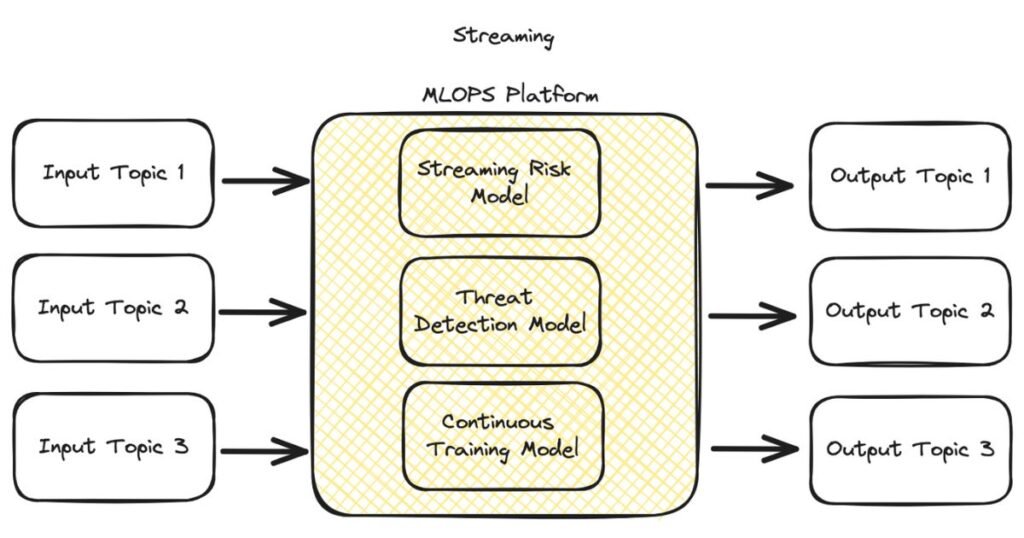
The wezic0.2a2.4 model needs a systematic process in the testing and implementation. Even sophisticated systems can fail to achieve desired results without proper planning. This means that organizations ought to adopt a step-wise approach to a successful deployment.
1. Benchmarking responsibly for accurate evaluation
Benchmarking is used to gauge the level of performance of the model in various conditions. Organizations can measure efficiency by comparing the results with anticipated ones. Additionally, the benchmarking should be under the responsibility so that the results could be realistic and up-to-date. Thus, it assists in making informed choices.
2. Environment sandboxing for safe testing
Sandbox environments enable the teams to test the wezic0.2a2.4 model without any impact to live systems. This will be safe and eliminate embarrassing disruptions. Besides, sandboxing offers a regulated test setting to experiment. This way, teams are able to improve configurations before the entire deployment.
3. Monitoring for drift and continuous improvement
Model drift is the performance change with time because of new data patterns. So it is necessary that it is constantly monitored. In addition, monitoring is useful to detect performance lapses. Consequently, changes can be made speedily to ensure accuracy.
The role of community feedback in wezic0.2a2.4 model evolution
The version wezic0.2a2.4 keeps on being enhanced with user insights and researchers observations. The experience of developers and organizations is used, and the system is even fine-tuned. Due to such interaction, the model develops quicker and is more dependable.
Moreover, practical problems and solutions can be raised in community discussions. This assists beginners to avoid the pitfalls. Moreover, in interindustry systems, shared knowledge enhances the performance of the whole system.
Is wezic0.2a2.4 model the right choice for your business needs
The wezic0.2a2.4 model selection is based on business objectives and business needs. This is most beneficial to organizations that handle extensive data and have volatile environments. The model is suitable in industries where only change occurs continuously because the model is designed to adjust continuously.
Nonetheless, businesses should not disregard such aspects as data quality and technical skills. It is important to plan to implement it successfully. As such, it is important to examine needs prior to adoption.
Suitability checklist
| Requirement | Fit with Model |
| Large data handling | Strong |
| Automation needs | High |
| Predictive analytics | Excellent |
| Low technical support | Moderate |
Future direction and growth beyond wezic0.2a2.4 model version updates
Wezic0.2a2.4 model has a bright future as technological advancements are underway. Improvements to improve learning capability and integration features are already underway by developers. Due to this, the successive versions will be even more superior in terms of performance. Additionally, the model can also feature more AI-based interactions and enhanced real-time analytics. This will enable systems to work more autonomously. Therefore, less manual work will be, in effect, used by businesses.
Additional insights into scalability and real-world adaptability
Wezic0.2a2.4 is a notable model in that it can be scaled to various industries with a lot of ease. Its application in finance, healthcare, or logistics does not change significantly as far as it is adjusted to the demands of particular tasks.
Moreover, scalability assures organizations of expansion without limitations of the system. This renders the model not a short-term but a long-term investment.
Conclusion:
The model wezic0.2a2.4 is a good step in the direction of intelligent and adaptive systems that are in line with new business requirements. It incorporates learning, efficiency and scalability in a manner that is unmatched by the traditional system. It also enables companies to remain competitive amid a fast-evolving digital landscape due to its ability to enhance its performance constantly.
In addition, its predictive capabilities and flexibility in design render it appropriate to be adopted in the long run. The wezic0.2a2.4 model is likely to form an essential component of a future system as industries proceed to automation and data-driven approaches. Consequently, early adopting organizations can have a huge performance and innovation advantage.
Also Read About: Hazevecad04 Version on PC for Smarter CAD Design Work